Modern or Contemporary? Let's Clear That Up.
By Brian Enright
I can't tell you how many times I've looked at real estate listings and seen a house described as "modern contemporary" and not being sure if it's either, or if it can be both. The two terms get thrown around interchangeably so much that even people in the real estate industry get them mixed up. But here's the thing: modern and contemporary are actually
two distinct design styles, and understanding the difference can help you in your home search and in your appreciation of the style. So let's clear that up.
Modern Is a Specific Time Period
When we speak broadly about "modern architecture," we're actually talking about the design movement that had its heyday roughly from the 1920s through the late 1960s. Think of it as Modern architecture with a capital M, because it's tied to a particular moment in history.
The Modern movement emerged as a radical departure from the ornate Victorian and traditional styles of the time. Architects like Frank Lloyd Wright, Ludwig Mies van der Rohe, and Le Corbusier championed the idea that form should follow function. BTW I once had a friend who was a fan of Frank Lloyd Wright and he had two parakeets named Form & Function. Well, one day poor Function passed away and the way my friend told me was a note saying "Form no longer has anyone to follow."
Anyway, those revolutionaries changed everything when they stripped away useless decorative elements, embraced new industrial materials like steel and glass, and created buildings that were open with clean lines and exposed construction elements.
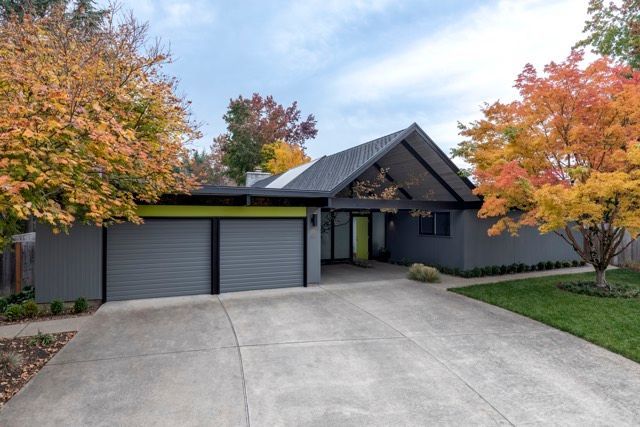
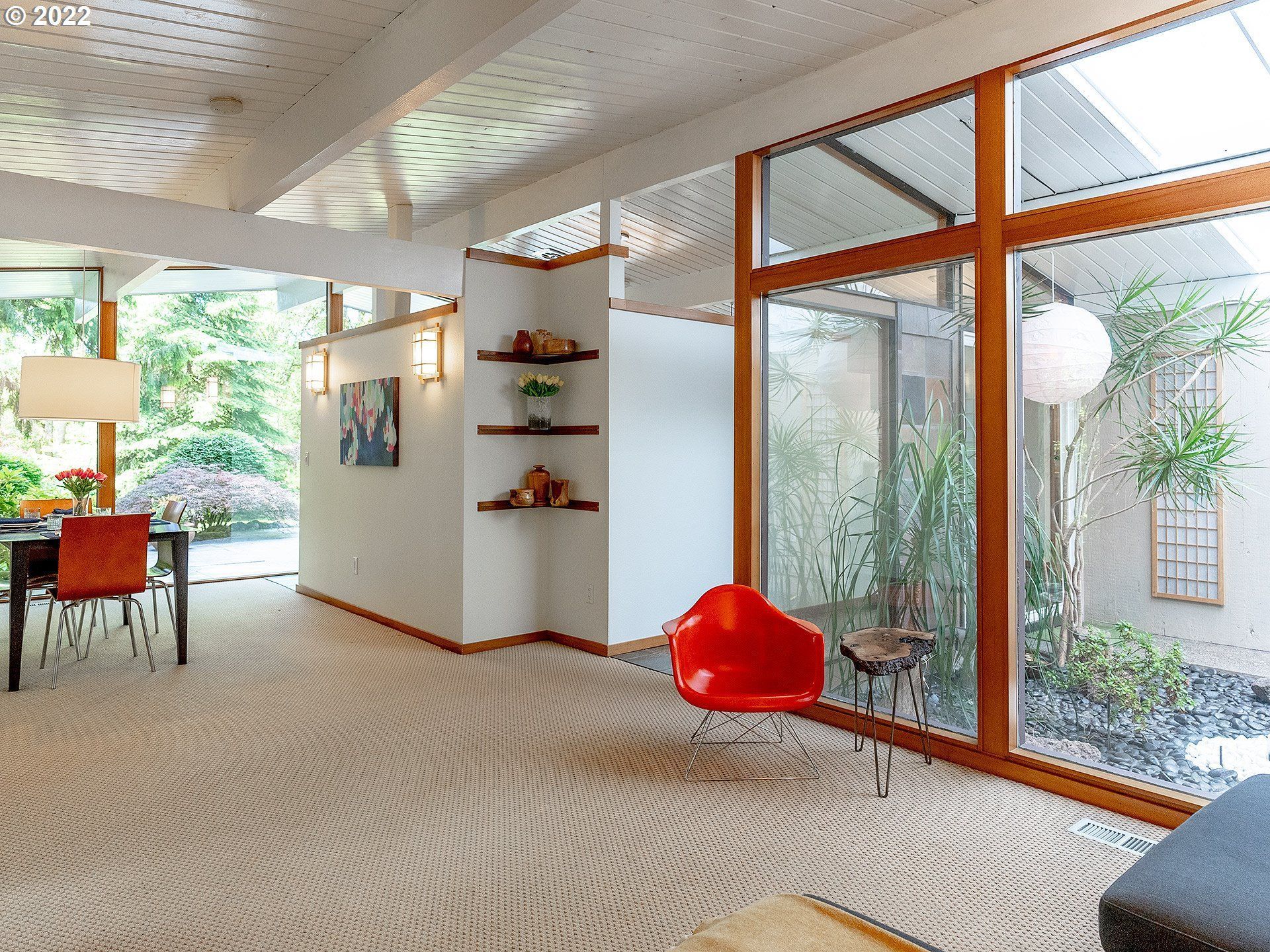
Mid-century modern is essentially the American residential interpretation of this Modern movement. Those iconic 1950s and '60s homes with their flat or low-pitched roofs, floor-to-ceiling windows, and open floor plans? That's modern architecture. A Rummer home in Portland's Eastmoreland neighborhood? Modern. A John Yeon house in the West Hills? Modern. An Eichler in California? Definitely modern.
Contemporary Is What's Happening Now
Contemporary architecture, on the other hand, is a moving target. It literally means "of the current time" - whatever that time happens to be. Contemporary design is what architects are creating today, using current materials, technologies, and aesthetic preferences.
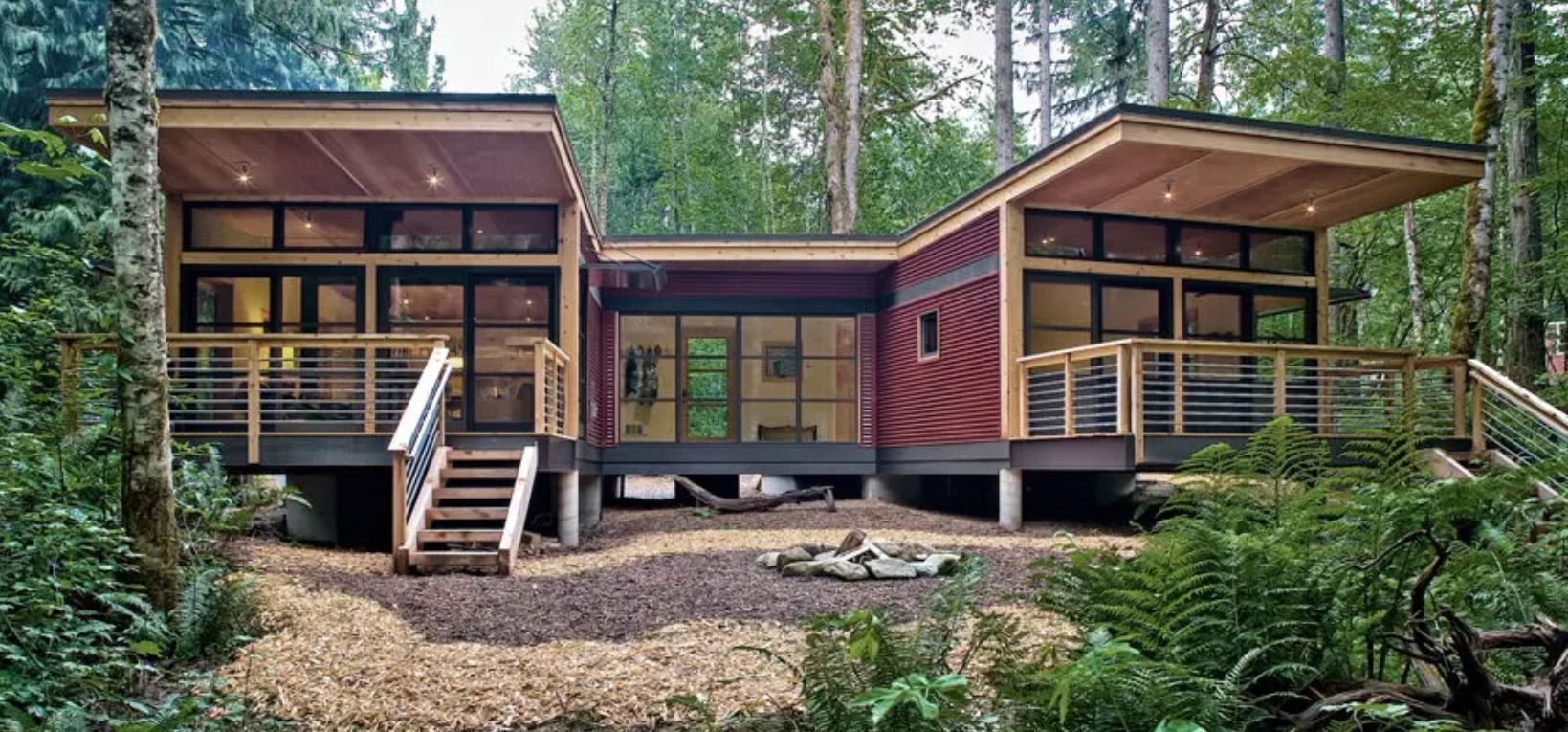
In the 1960s, contemporary architecture looked very different from what we call contemporary today. In 2025, contemporary homes might feature sleek minimalist lines, sustainable materials, smart home technology, and innovative eco-friendly engineering. In 2045, contemporary will mean something else entirely.
Contemporary architecture tends to be more experimental and varied than modern architecture. While Modern (with a capital M) had fairly defined principles and characteristics, contemporary design is all over the map. Some contemporary homes lean heavily on the modern aesthetic - you might even call them "modern-inspired contemporary" - while others incorporate traditional elements, natural materials, or bold sculptural forms that mid-century modernists would never have imagined.
The key thing to understand is that modern architecture is historical and contemporary architecture is current. When you say you love modern homes, technically you're expressing appreciation for a design philosophy that was around decades ago. What trips people up is that Modern and contemporary overlapped in the mid-20th century. For example a mid-century modern home built in 1955 was both Modern (part of the movement) and contemporary (the latest style).
Modern or Contemporary: The Key Differences
Time Period
Modern = a specific historical movement from roughly 1920s-1960s
Contemporary = right now, whatever "now" happens to be
Philosophy
Modern = strict design principles, form follows function, rejection of ornamentation
Contemporary = eclectic, experimental, incorporates current influences and technologies
Materials
Modern = steel, glass, concrete, plywood - industrial materials used in innovative ways for the time
Contemporary = whatever's popular and cutting-edge today - sustainable materials, high-performance glass, engineered wood products, recycled materials
Aesthetics
Modern = horizontal lines, open floor plans, integration with nature, post-and-beam construction, minimal ornamentation
Contemporary = varies widely but often includes asymmetrical forms, large windows placed strategically (not necessarily walls of glass), mixed materials, sustainable design features.
Rooflines
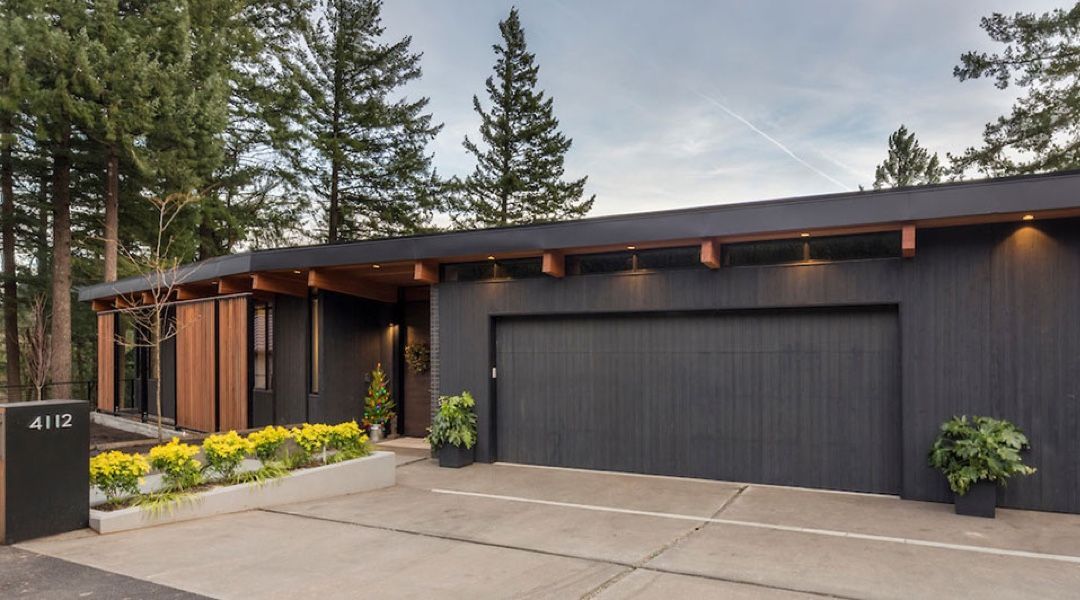
Modern = flat or low-pitched roofs, often with significant overhangs
Contemporary = all over the map - flat, shed, gabled, or complex geometric forms
Why This Is So Confusing
Many contemporary architects draw heavily on Modern design principles. They love those clean lines, open spaces, and honest use of materials. So a home built in 2026 might look remarkably similar to a home built in 1956 - but one is contemporary (built now) and one is modern (built during the Modern era).
Unfortunately a lot of real estate brokers and people in the industry use "modern" as a catch-all term for anything that doesn't look traditional. And then there's the phrase "contemporary modern" or "modern contemporary" which really doesn't mean much - it's essentially redundant, like saying "current historical." What they probably mean is "a newly built home with modern-inspired design." I really hope real estate agents are reading this and it helps them describe their modern and contemoprary listings more accurately.
How This Plays Out in Portland
Here in Portland we have the whole spectrum of true Modern homes and beautiful contemporary homes that have been inspired by modern design.
If you're looking at a home in Eastmoreland or Oak Hills built in the 1960s with an atrium, post-and-beam construction, and clerestory windows then you're looking at a Modern home, specifically a mid-century modern home. It's a piece of architectural history from the Modern movement.
But if you're looking at a newly built home in the Alberta Arts District or in Happy Valley with clean lines, lots of glass, and sustainable features - that's a contemporary home. It might be heavily influenced by modern design principles, but it's using current construction methods, current materials, and current energy standards.
Just to take it to the next level,
Rummer Development is still building
Robert Rummer homes in the Portland area. That means you can actually build a contemporary home that is an exact copy of a mid-century modern home on your own lot. Very cool!
Modern is When; Contemporary is Now
I could go on and with examples about all of this, but hopefully the point is made. Modern architecture is a historical style from a specific era. Think Mad Men and Eames chairs. It's characterized by specific design principles and a particular aesthetic that emerged from that moment in time.
Contemporary architecture is whatever's being designed and built right now. It's often influenced by modern principles (and many other styles too), but it's using today's materials, today's technologies, and today's design thinking.
So the next time someone describes a home as "modern contemporary," you'll know they probably mean "a new home with clean, minimal design inspired by mid-century modern principles" - even if that's not exactly what they're saying.
Recent Posts